
Craftsmanship in Modern Work · Why Care, Judgement, and Standards Still Matter
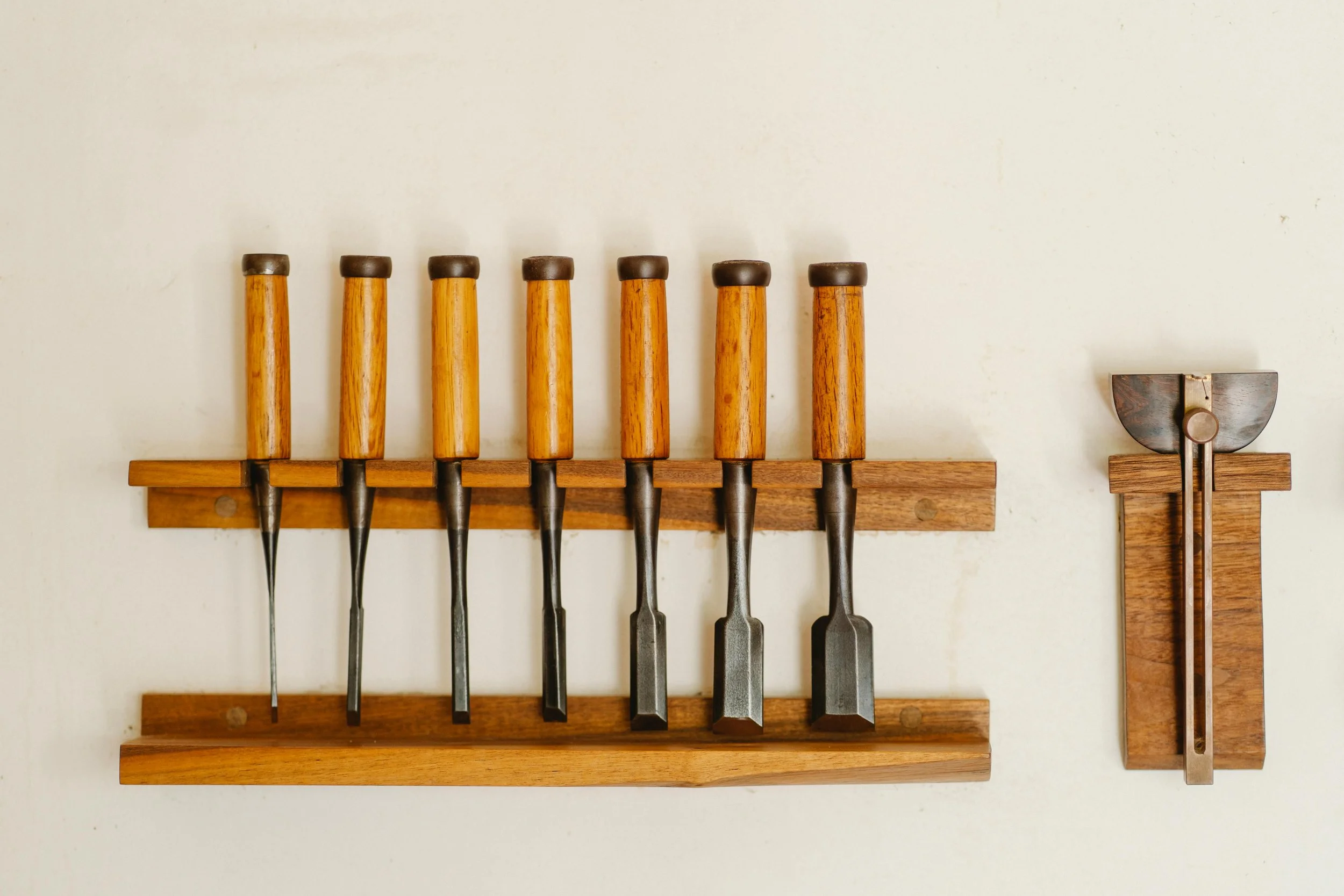
Source: Ono Kosuki via Pexals
Summary || Craftsmanship in Modern Work · Why Care, Judgement, and Standards Still Matter
On the quiet difference between work that is completed and work that is considered
In complex, fast-moving environments, there is a quiet but widening gap between work that is delivered and work that is genuinely cared for. Craftsmanship names that gap - and offers a way of working that closes it. Not through perfectionism or nostalgia, but through attention, judgement, and a felt responsibility for what the work will do in the world. This piece explores what craftsmanship actually means today, why it matters more under pressure and AI acceleration, where it shows up in organisations, and what it asks of leaders who want to cultivate it.
-
noun
an activity involving skill in making things by hand.
skill used in carrying out one's work. 'a lack of craft and organisation'
verb
exercise skill in making something. 'she carefully crafted the speech'
10min read
You can usually tell when something has been properly thought through.
A document that makes sense the first time you read it. A meeting that feels intentional rather than assembled. Work that seems to hold together without drawing attention to itself.
And you can tell when it hasn't.
Not wrong. Not broken. Just thin.
Completed, but not really considered.
In environments where the pace is high and expectations are constantly shifting, the pressure to move quickly is real, and often justified. But it also changes what good looks like — quietly, and usually without announcement.
Standards don't collapse. They drift. "Good enough" becomes easier to accept when time is the primary constraint, and over time the line between adequate and excellent begins to blur. This rarely happens intentionally. It happens through accumulated small accommodations, each one reasonable in the moment.
The word that helps make sense of that difference — between work that is delivered and work that is genuinely cared for, is craftsmanship.
Not the romantic version. Not nostalgia for slower times or timber workshops. Something quieter than that. A way of relating to work that most people have felt, even if they haven't named it.
Richard Sennett, who spent years thinking about this, described craftsmanship as an enduring human impulse, the desire to do a job well for its own sake. Not for external reward. Not to impress. Because the work deserves it, and because the people it will reach deserve it.
That framing is more radical than it sounds. It suggests that craftsmanship is less about the quality of the output than about the quality of the relationship between the person and their work.
What craftsmanship really means
Craftsmanship is frequently mistaken for perfectionism. They're not the same thing at all.
Perfectionism is anxious and self-regarding. It's about the person doing the work — their standards, their reputation, their fear of falling short. It tends to be closed and controlling, resistant to feedback and hostile to ambiguity.
Craftsmanship is different. It's other-regarding. The question it asks isn't "is this good enough for me?" It's "will this actually serve what it's meant to serve?"
The master carpenter, Sennett observed, finishes the back of a cabinet that will face the wall. Not because anyone will see it. Because the work is a whole thing, and it deserves to be made whole.
That quality of wholeness is what distinguishes craft from mere completion. And it rests on several things working together.
Judgement is at the centre. Processes and frameworks provide structure, but they cannot anticipate the nuance of real situations. Craft lives in the interpretation — in the ability to read context, make small adjustments, and bring coherence to complexity. Donald Schön called this reflection-in-action: treating practice as a reflective conversation with the situation, where you're continuously reading what the work is asking rather than imposing a predetermined response.
Tacit knowledge sits underneath the judgement. Much of what makes someone genuinely skilled cannot be fully articulated — it's developed through long practice, patient feedback, and accumulated experience. This is what Michael Polanyi meant when he said we know more than we can tell. A craftsperson's sense for when something is right, or wrong, is embodied in their hands and their history, not stored in a manual.
Attention is perhaps the most fundamental ingredient. Not concentration in the narrow sense, but a quality of presence that notices what's slightly off, what's unexpectedly working, what the work needs from you in this particular moment. Cal Newport, writing about deep work, linked exactly this quality to the mentality of master craftsmen — arguing that complex cognitive work done with genuine focus both improves skill and makes the work more satisfying. Mihaly Csikszentmihalyi's research on flow pointed to the same thing: the highest states of engagement and growth arise when we're fully absorbed in a task that genuinely stretches us.
And underneath all of it is care. Not sentiment — a felt sense of responsibility for the integrity of what you're producing and for the people it will reach. Matthew Crawford, in his philosophical account of skilled work, argued that meaningful work is grounded in real consequences. The good craftsperson, he wrote, answers to something other than personal preference. They answer to the work, to the materials, to the reality the work is trying to address.
There is something else worth naming, even if it sits at the edge of what professional writing usually allows.
The philosopher Iris Murdoch wrote about moral attention as a particular quality of seeing — the discipline of looking clearly at what is actually in front of you, rather than what you want to see or what is convenient to see. She called it “really looking.” Not judging, not managing, not optimising. Just attending, honestly, to the reality of the situation.
What strikes me is how close this is to what craftsmanship feels like from the inside. The craftsperson who finishes the back of the cabinet isn’t following a rule. They’re responding to something, a felt sense that the work has integrity, or doesn’t, and that this matters. There is something almost moral in that response. Not morality in the sense of compliance or virtue-signalling, but in the older sense: a seriousness about what the work owes to the world.
Murdoch had a phrase for this quality when it showed up in art and in people: moral beauty. The beauty of someone who is genuinely paying attention. Who cares about what is real rather than what is impressive. Who brings the same quality of honesty to a small decision as to a large one.
Craftsmanship, at its best, has this quality. It isn’t aesthetic, it doesn’t require the work to be elegant or original. It’s something quieter: the mark of work made by someone who took seriously what it owed.
Craftsmanship, understood this way, is less about individual brilliance and more about a way of working. One that consistently produces clarity, coherence, and trust, not as outcomes to optimise for, but as natural consequences of how the work was made.
Why this matters now
The conditions many organisations are operating in today are not neutral. They actively shape what kind of work gets done.
The pace has accelerated. Expectations are higher. The volume of decisions, communication, and context-switching continues to grow. In this environment, the pressure to optimise for throughput is understandable. Speed creates momentum, reduces ambiguity, and allows organisations to respond to change more quickly. There are genuine benefits to moving fast.
But pace has a quiet side effect. When the primary constraint is time, standards drift in ways that are hard to notice precisely because everyone is adjusting together. The gap between adequate and careful narrows, and eventually disappears. Research on organisational dynamics documents this clearly - chronic time pressure increases reliance on heuristics and shortcuts, and gradually erodes the psychological safety that allows people to raise problems before they become crises.
There's something else worth sitting with honestly.
Many organisations are now integrating AI tools that can produce competent outputs at remarkable speed. A report, a strategic outline, a communication plan, complete, coherent, fast. These tools are genuinely valuable. But they also make something newly visible: when producing something that looks complete becomes easy, the distinction between assembled and genuinely considered becomes more important, not less.
Research on AI use in professional settings reveals a troubling pattern. Frequent reliance on AI assistance correlates with lower reasoning and critical thinking scores. Clinicians accustomed to AI support perform worse when the system is removed. Competence, it turns out, becomes fragile when practice is repeatedly outsourced. Judgment atrophies in review mode.
Several researchers have noted that AI subtly shifts what quality means. In knowledge work, AI's speed and fluency can make "good enough and fast" the default — raising throughput while quietly lowering expectations for originality, depth, and contextual sensitivity. One framing that struck me: organisations increasingly define quality as consistency plus compliance with AI-mediated processes, with humans positioned as reviewers of output rather than primary creators.
Craftsmanship becomes less about execution and more about discernment. It is the capacity to tell the difference between what has been generated and what has been genuinely thought through.
There is also a human dimension to all of this that deserves naming. Sustained cognitive load, constant context-switching, and high volumes of communication make deep attention harder to sustain. When attention fragments, coherence follows. The ability to notice what matters, to stay with a problem long enough to understand it properly, is precisely what fragmented environments erode first.
For leaders, this matters in a particular way. Standards are rarely set explicitly. They are inferred from behaviour. The level of care given to decisions, communication, and priorities signals what is valued far more clearly than any stated principle. Over time, these signals shape how seriously people take their work, how much pride they feel in it, and how much trust exists within teams.
Research on intrinsic motivation and pride in work is consistent on this point. When people feel genuinely autonomous, competent, and connected to the impact of their work, they bring a quality of engagement that no process can mandate. Craftsmanship is both a cultural and psychological driver of performance, and it is most easily cultivated or eroded through the daily signals of what leaders actually treat as important.
How craftsmanship shows up
Craftsmanship rarely announces itself. It lives in smaller places.
It shows up in standards. Not policies or checklists, a felt sense of what the work should be. People working with craft hold an internal reference point that operates independently of what they could get away with. Communication that is clear rather than merely complete. Decisions that feel genuinely weighed rather than professionally presented. The difference is often subtle, but those receiving the work know it immediately.
It shows up in invisible work. The draft revised not because a deadline required it but because something wasn't right yet. The meeting designed rather than assembled. The extra thought given to how a recommendation will land for a particular person in their particular circumstances. This work is, almost by definition, easy to skip. It rarely appears in any measurement. Which is partly why it's so vulnerable when pressure increases.
It shows up in small decisions. Whether someone pauses when they notice something that doesn't quite add up. Whether they flag an inconsistency or let it go. Whether they simplify rather than complicate. Whether they take responsibility for the integrity of what they're producing, even when the stakes appear low. These moments are easy to dismiss individually. Accumulated over time, they determine the texture of how an organisation thinks, and whether its work can be trusted.
It shows up in how people respond under pressure. This is where it gets revealing. When deadlines tighten and priorities shift, the quality of attention given to communication, decision-making, and collaboration becomes a signal of what is actually valued — as distinct from what is stated. Teams read these signals carefully and adjust their own behaviour accordingly. Standards don't hold because they're mandated. They hold because people see them being held.
And it shows up in leadership behaviour. Not through statements about quality or values, but through attention. The questions a leader asks. The level of clarity they expect of themselves. The seriousness with which they treat decisions that others might consider minor. One writer described craft-like leadership as caring about the invisible parts of the organisation — the integrity of a meeting, the honesty of a memo, the coherence of a decision, even when no one is watching.
There's an important word for this: stewardship. Mintzberg wrote about strategy as craft, arguing it emerges less from frameworks than from the accumulated judgement of people who are genuinely in contact with the reality they're trying to shape. The same is true of leadership. The craft-minded leader isn't primarily managing outputs. They're shaping the conditions that allow good work to emerge consistently, building an environment where people can do their best work, then passing that environment on to whoever comes next.
In this sense, craftsmanship and long-horizon thinking are deeply connected. Work made with care tends to hold up over time. Work assembled quickly tends to introduce fragility, the kind that only becomes visible months later, when the shortcuts have compounded.
Where to look first
Craftsmanship can’t be installed. But it can be noticed, and noticing is where it usually begins.
The questions below aren’t a checklist. They’re invitations to look at work you’re already doing with a slightly different quality of attention. Some may open up quickly. Others might take a walk to sit with properly. Each one is also, quietly, a deeper question in its own right worth returning to.
The gap you’re tolerating
In the work you’re closest to right now, is there a difference between what you’re delivering and what you actually think it should be? If so, when did you stop noticing it?
Most of us are tolerating a gap somewhere. The interesting question isn’t whether the gap exists. It’s whether we’re aware of it, and whether we’ve decided, consciously or not, to let it stay.
The standard you hold when no one is watching
Think of a piece of work you completed recently that no one scrutinised closely. Did the standard you applied to it reflect what you actually believe good work looks like?
Craftsmanship is less visible in the high-stakes moments — when everyone is paying attention — and more visible in the ordinary ones. The email you spent five more minutes on than you had to. The meeting you actually prepared for. What you do when the stakes appear low is often a clearer signal of your real standards than what you do under scrutiny.
The invisible work that keeps disappearing
What is the work you do before the work — the thinking, refining, reconsidering — that shapes the quality of what gets delivered but never appears in the output? And is that work protected, or is it the first thing to go when pressure increases?
In most organisations, invisible work is the first casualty of speed. It can’t be measured, so it can’t be protected. Noticing how much of it is happening — or not — tells you something important about the actual conditions for craft in your environment.
What your attention is actually signalling
In the last week, what did the quality of your attention communicate to the people around you about what matters here? Not what you said — what your attention showed.
Leaders set standards less through what they declare and more through what they attend to. The questions you ask, the precision you expect of yourself, the care you bring to the work that seems minor — these are the signals that shape whether craftsmanship is valued or quietly deprioritised in the people around you.
The craft you might be handing to a machine
Which parts of your work are you currently delegating to AI tools? Of those, are any developing a kind of judgement or discernment that you’d want to keep practising yourself?
This isn’t an argument against AI tools. It’s an invitation to use them deliberately. There’s a difference between offloading routine work to make space for deeper thinking, and offloading the thinking itself. The former protects craft. The latter, over time, erodes it.
The environment you’re shaping for others
Does the environment you’re creating — through your expectations, pace, and priorities — make it easier or harder for the people around you to do work they’re genuinely proud of?
The ultimate expression of craftsmanship in leadership isn’t the quality of your own work. It’s the quality of the environment you leave behind for others to work in. That’s the craft that compounds most quietly — and matters most over time.
Closing reflections
Craftsmanship is not something that can be mandated or installed through policy. It emerges, or it erodes, through a thousand accumulated choices about how seriously to take the work in front of you.
The structural pull toward adequate is real. Quarterly cycles, full inboxes, competing priorities, and the sheer pace of modern work all compress the space in which craft can operate. This isn't a personal failing. It's the environment. And like most environmental pressures, it requires deliberate counterforce.
What I notice in organisations that seem to maintain their integrity over time is rarely a single strategy or initiative. It's more often the presence of shared expectations about what good actually looks like — expectations reinforced through daily choices about how work is approached, how standards are held, and how leaders treat the work they're closest to.
The quiet cost of letting the gap between what we deliver and what we think it should be quietly normalises — in the clarity of decisions, the coherence of systems, and the level of trust people place in the work and in each other.
That cost is hard to see in any single moment. It accumulates, the way most important things do — through incremental decisions and unintended consequences that only become visible once momentum has already built.
Perhaps the real question isn't whether craftsmanship still matters. It's where it is quietly present already. In the teams that take the time to think things through. In the leaders who hold the line on clarity when it would be easier not to. In the small decisions that shape whether work simply moves forward or genuinely holds together.
And in the end, craftsmanship is less about slowing down and more about paying attention — to the work, to the people it will reach, and to the systems being quietly shaped by every choice about how seriously to take it.
So here's the question worth sitting with: in the work you're closest to right now, is there a gap between what you're delivering and what you actually think it should be, and if so, what is it costing you, and the people around you, to let that gap stay?
Researched and written by Rebecca Agent, with credit to the following AI tools for assistance in producing this content:
Editorial and grammar writing assistant | Grammarly (AU/British English)
Research, writing, reader timing and SEO | ChatGPT, and Claude
The Deep Dive Podcast Overview | NotebookLM by Google
Topic research to link peer-reviewed research papers | Storm Genini Stanford; Google Gemini, Perplexity
. . .
Key thinkers
Richard Sennett — The Craftsman (2008)
Donald Schön — The Reflective Practitioner (1983)
Matthew B. Crawford — Shop Class as Soulcraft (2009)
Michael Polanyi — The Tacit Dimension (1966)
Henry Mintzberg — Crafting Strategy (1987)
Iris Murdoch — The Sovereignty of Good (1970)
Cal Newport — Deep Work (2016)
Mihaly Csikszentmihalyi — Flow: The Psychology of Optimal Experience (1990)
. . .
See related pieces (on the blog) :
If this content was helpful to you and your work please comment, share, and like !