
Orchestration · The Craft of Creating Conditions
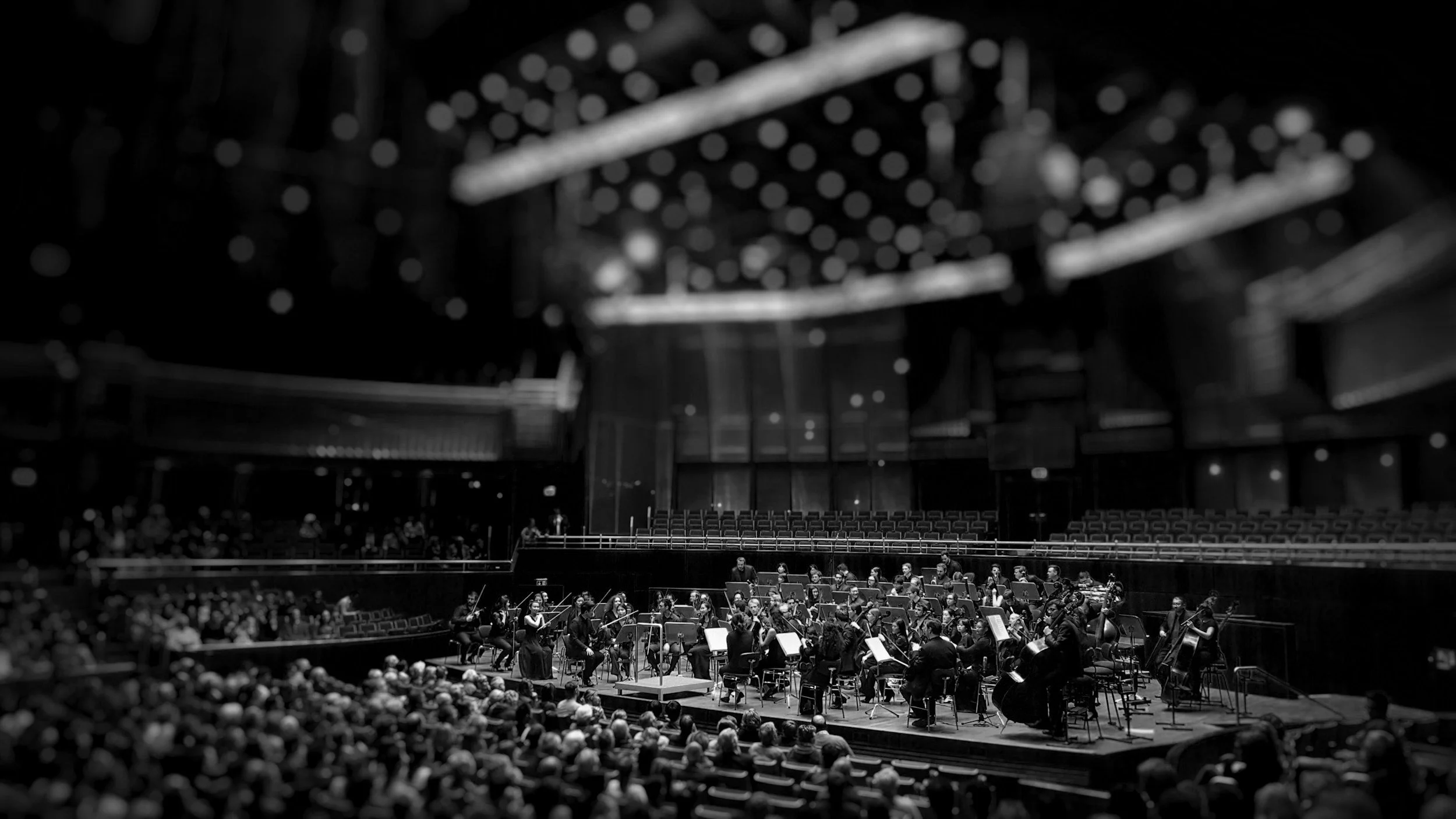
Source: @arindam_mahanta via Pexals
Summary || Orchestration · The Craft of Creating Conditions
On what leadership becomes when the work is no longer yours to do
In complex work, a moment arrives when a leader can no longer be the best person in the room at the thing being done, and the job quietly becomes something else. Orchestration is the name for that something else. It is the craft of shaping the conditions in which other people do their best work, and then holding the whole together without gripping it. This piece looks at what orchestration actually is, why it matters more under complexity and AI acceleration, how it shows up in the ordinary running of a team, and what it asks of leaders who want to build it rather than fake it.
-
verb
arrange or direct the elements of (a situation) to produce a desired effect.
arrange (music) for orchestral performance.
7min read
What is this
You can usually feel the difference between a team that is being managed and one that is being conducted.
In the first, the energy runs to a single point and waits there. Decisions bank up behind one person. People are capable and slightly held back, and most of them know it.
In the second, something holds the whole together without gripping it. People move on their own judgement and still cohere. The leader is present, often barely visible, and the work is better for it.
Most leaders can produce the first. The second is harder, and it has a name that is rarely used well. Orchestration.
Richard Sennett gives the clearest picture of it. The conductor is the one person on stage who makes no sound. Everything they do shapes what everyone else does. They set the tempo and hold the whole together, listening to each player and to the shape of the sound at once. A conductor who over-directs gets music that is technically correct and somehow dead. The craft is in knowing what to release.
What orchestration really means
Sennett's larger argument runs underneath the metaphor. In his work on cooperation, he treats collaboration itself as a craft, something built from listening and long practice rather than from command. Read alongside his writing on craftsmanship, the through-line is plain. The craftsman does a job well for its own sake. The leader who orchestrates does the same thing one level out: the object of their craft has moved, from the work itself to the conditions in which other people do the work. Sennett's picture for this is the workshop, a place a master builds so that others can refine their own practice, in place of a plan that simply hands them tasks.
Orchestration is craftsmanship pointed at the environment rather than the output.
This is where orchestration and delegation genuinely diverge, and the difference runs deeper than tidiness. Delegation reassigns a task and watches it. The work can be specified, handed over, inspected and corrected. It suits stable problems where the answer is known in advance and the real question is who does what. Orchestration works on a different layer. It shapes the relationships, the timing and the conditions so that good work emerges across a system, instead of arriving through a single handover. Delegation treats people as executors of a defined task. Orchestration treats them as co-creators with craft of their own.
Why this matters now
The conditions that make orchestration matter are old, and they are intensifying. Most consequential work now sits in complex, adaptive territory, where no single person holds the answer in advance and the useful responses form through interaction. Complexity leadership theory, developed by Mary Uhl-Bien and Michael Arena among others, puts the problem bluntly. Under adaptive challenge, command-based control suppresses the very thing an organisation needs: the local interactions and information flows where new responses actually form. Their framework separates the administrative work of formal structure from the adaptive change that emerges when people interact, and it names a third function sitting between the two. Enabling leadership. That enabling layer is orchestration by another name, the work of tuning constraints, connections and feedback so a system can organise itself.
Henry Mintzberg made a quieter version of the point years earlier, writing about managing people who understand their own work better than their manager does. Once that is true, and in most skilled work it is, leading by being the best practitioner is no longer available to you. You lead through conditions instead.
AI sharpens all of this. When competent output arrives in seconds, producing the work is no longer where a leader's value sits. It moves to the conditions and judgement around the work, the things a system yields that a model cannot. The more a team can generate quickly, the more it matters who is holding the whole, and who is asking what the fast output missed.
Where it goes wrong
Orchestration fails in two directions, and the first is the more sympathetic. The leader who cares most about quality is the one most tempted to reach in and do the work themselves. Sennett named this the obsession of the craftsman, a devotion to the ideal so strong it starts to strangle the thing it loves. In a conductor it produces over-direction and lifeless music. In a leader it produces a team that waits, because it has learned that the standard lives in one person's hands and will be applied there. The discomfort of orchestration is exactly this: you have to trust that your standards now live in the environment you have built, and hold them by shaping where they live rather than by applying them yourself each time.
The second failure is the mirror image, and it is common enough to name plainly. Orchestration collapses into abdication the moment a leader steps back without having built anything for people to step into. Pull away before the shared standards, the trust and the safety to raise a problem early are in place, and you are not orchestrating. You have left. Orchestration without foundation is just neglect with a philosophical name.
This is why psychological safety sits at the base of the whole structure. Amy Edmondson defines it as the shared belief that you will not be punished or humiliated for speaking up with a question, a concern or a mistake. Without it, stepping back is dangerous, because the problems that should surface early stay hidden until they are expensive. The leader who orchestrates well has usually done quiet, unglamorous work first, building enough safety that people will tell them what is going wrong while it is still small. Edmondson's shorthand is that you replace blame with curiosity. That is the ground orchestration stands on.
How orchestration shows up
Orchestration rarely announces itself. It shows up in smaller places than the org chart suggests.
It shows up in what a leader chooses not to fix. A capable person hands in work that is good and not quite how the leader would have done it. The orchestrating move is often to let the difference stand, because the person's judgement is the thing being built, and correcting every divergence trains a team to stop bringing its own. Restraint here is a deliberate call: is the marginal improvement worth more than the capability the person builds by owning the outcome?
It shows up in what happens when the leader is not there. Well-orchestrated teams do not stall in their leader's absence, because the conditions for good decisions have been built into how the group works. The test is rarely visible while the leader is in the room. It is visible in the week they are away.
It shows up in the seams. Most complex work fails at the interfaces, the handovers between people and functions where information thins and ownership blurs. Delegation attends to the boxes. Orchestration attends to the lines between them, the places where a system either self-corrects or quietly breaks.
Where to look first
The questions below are not a checklist. Read them as invitations to look at work you are already doing with a slightly different quality of attention.
What you are still doing yourself
Look at the work you are closest to right now. How much of it are you holding because it genuinely needs you, and how much because letting go is uncomfortable?Most leaders are over-holding somewhere. The interesting question is whether the grip is a considered choice or a habit you have stopped noticing.
What you would have to trust
Pick one thing you would need to release to orchestrate rather than execute. What would have to be true in the environment for you to release it without anxiety?The answer usually points at a condition you have not built yet. That gap is the actual work.
Whether you have built the floor
Before you step back from something, ask whether the standards, the trust and the safety to raise a problem are already in place.Stepping back onto solid ground is orchestration. Stepping back onto nothing is abdication wearing its language. The difference is entirely in what you built first.
The environment you are shaping
Does the way you lead, your pace, your questions, your tolerance for early problems, make it easier or harder for the people around you to do work they are proud of and to lead within it?
The final expression of orchestration shows up in the environment you leave behind, and in whether the people in it have grown more able to hold the whole themselves.
Closing reflection
Orchestration cannot be installed any more than craft can. It builds, or it erodes, through a long run of small choices about when to hold on and when to let go, and whether the conditions are strong enough to carry what you release.
The pull toward doing it yourself is real, and rarely irrational. You are often genuinely faster, and the standard genuinely matters. That is exactly why the discipline is hard. The leaders who orchestrate well still care intensely about the work. They have simply decided that the most important thing they can shape is the environment, and they have done the unglamorous work of making it strong enough to trust.
The craft is in knowing what to release, and in having built something strong enough to release it into.
So the question worth sitting with is quieter than any model. Look at what you are currently orchestrating and what you are still doing yourself. Then ask which side of that line each thing sits on because it genuinely needs you there, and which sits there because that is where you are most comfortable. The honest answer is usually mixed, and it keeps moving. The craft, at this level, is mostly in reading that line well, and having the nerve to act on what you read.
Researched and written by Rebecca Agent, with credit to AI tools for assistance in producing this content:
Editorial and grammar writing assistant | Grammarly (AU/British English)
Research, writing, reader timing and SEO | ChatGPT, and Claude
The Deep Dive Podcast Overview | NotebookLM by Google
Topic research to link peer-reviewed research papers | Storm Genini Stanford; Google Gemini, Perplexity
. . .
Key thinkers
Mary Uhl-Bien & Michael Arena — Complexity Leadership Theory (2018)
Henry Mintzberg — Managing (2009)
Amy C. Edmondson — The Fearless Organization (2018)
. . .
See related pieces (on the blog) :
If this content was helpful to you and your work please comment, share, and like !