
Resistance: What the Old System is Worth
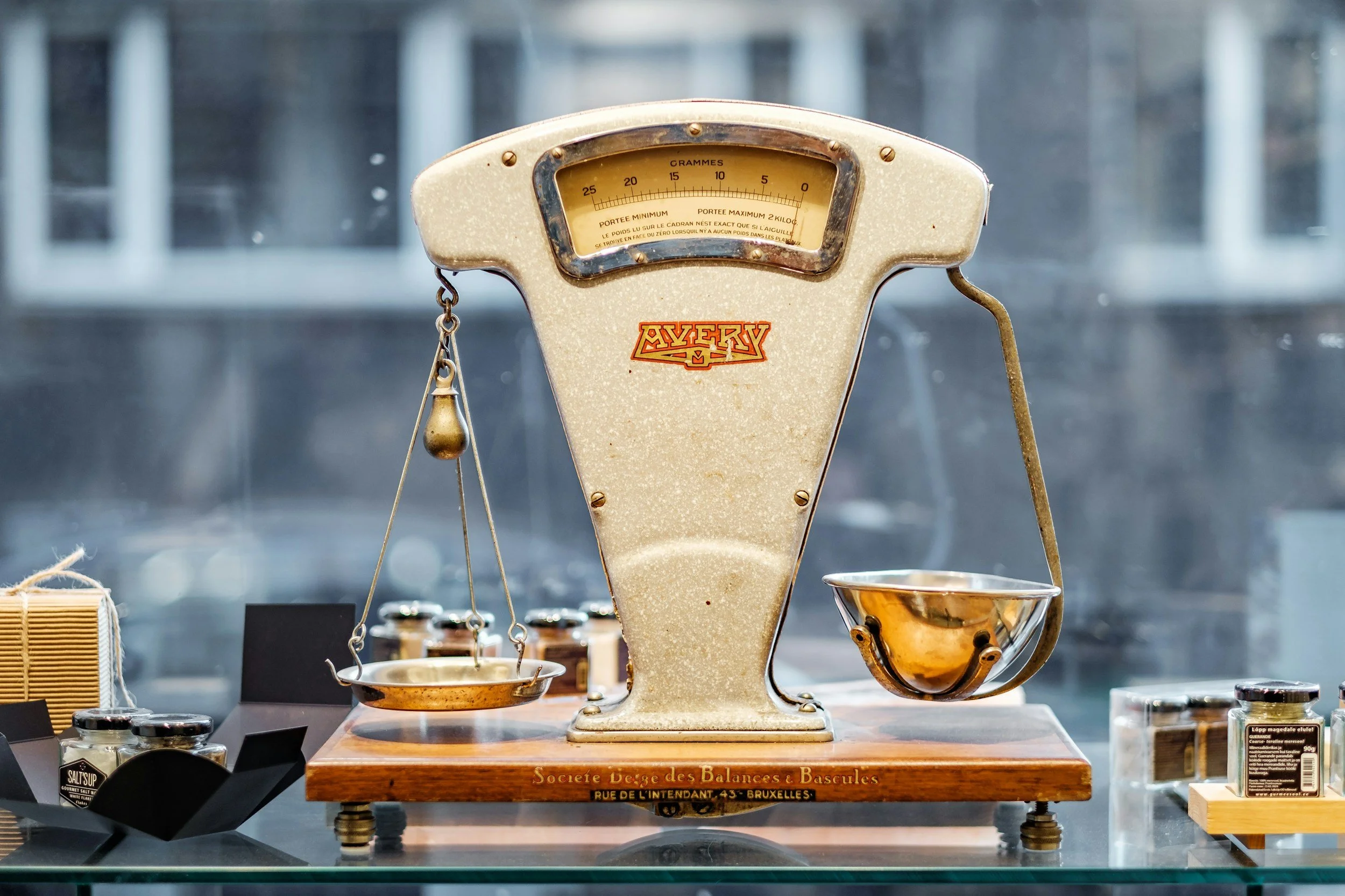
Source: @saltsup via Unsplash
Defending the Old System: What Resistance Is Actually Telling You
On the ledger nobody asks to see
Most change work treats resistance as a persuasion problem. Tell a better story, list better benefits, and people will come round.
The research points somewhere more useful. People defend old systems because they are doing a different calculation from the one on the slide, and because the organisation around them usually rewards that defence.
This piece covers what the research says about loss aversion, status quo bias and the endowment effect. Then why those ideas only explain half of what happens in a room, and what changes in the design once you take the other half seriously.
-
noun
the refusal to accept or comply with something; the attempt to prevent something by action or argument.
“the change met with considerable resistance”
the ability not to be affected by something.
11min read
What is this
There is a moment in most change programmes that plays out the same way every time.
A process everybody privately agrees has stopped working gets defended. Calmly, with good reasons. The timing is wrong, the data is thin, and the last attempt went sideways in a way nobody wants to repeat.
The easy read is that these people are afraid of change. It is a comfortable read, because it puts the whole problem inside them and none of it inside the design.
There is a better question underneath. What does a person think they are losing when the organisation changes?
Answer that and resistance stops looking irrational. It starts looking like a calculation, done carefully, on a ledger nobody has thought to ask for.
What resistance is made of
Three ideas from behavioural economics turn up constantly in change work, usually blurred into one. They do different jobs.
-
William Samuelson and Richard Zeckhauser named it in 1988. Across a long run of experiments, people chose the existing option far more often than merit would predict, and when the researchers moved the label so a different option became the current one, the choices moved with it. They found the same pattern in real decisions about health plans and retirement schemes.
The useful finding is quieter than the headline. Doing nothing is never neutral in the mind. The existing way of working gets an advantage just by being there first.
Hee-Woong Kim and Atreyi Kankanhalli tested this inside a real organisation in 2009, studying employees who were facing a new enterprise system. The strongest driver of resistance was switching cost. What colleagues thought mattered, and so did confidence, but mostly because of what they did to the cost of moving.
Read that finding closely and it stops being about attitude. People were not rejecting the destination. They were pricing the journey, and the price was coming out of their own pocket.
-
Daniel Kahneman and Amos Tversky published prospect theory in 1979, and two of its findings matter here. People judge outcomes against a reference point, and losses weigh more than gains of the same size. Their 1991 paper showed the same thing in ordinary choices with no gambling involved.
Something else is going on too. People can see exactly what they are losing. They can only guess at what they will gain. One side of the ledger is specific and the other is a promise.
Now watch what that does to a change announcement.
The organisation is speaking in gains. Simpler. Faster. Better for the customer. Fewer handoffs.
The person in the fourth row is running a different calculation entirely. Will I still know how to do my job? Will the expertise I spent nine years building still count? Will the thing I made get quietly switched off in a release note?
Anol Bhattacherjee and Neset Hikmet found this among physicians resisting new health information technology in 2007, where what predicted resistance was the perceived threat to how they already worked. Liette Lapointe and Suzanne Rivard traced the same thing two years earlier and showed how that resistance spread through an organisation over time.
The loss is rarely money. It is competence, autonomy, standing, and the routines that let someone be reliably good at something.
-
Richard Thaler introduced it in 1980, and Kahneman, Jack Knetsch and Thaler demonstrated it in 1990 with the mug experiments. People given a mug at random wanted much more to give it up than similar people would pay to get one. Owning something changes what you think it is worth.
Mark Harcourt and colleagues brought this into organisations in 2020, looking at managers who resisted codetermination in Germany. Those managers had come to hold the right to manage as something they owned, so sharing decision rights felt like having something taken, even where the new arrangement would have suited them well enough.
That is theory applied to a case rather than an experiment, and it is worth saying so plainly. But anyone who has tried to move a decision right out of a team that built it will know the shape.
A process stops being just a process once people have poured years into it. A team structure carries someone’s fingerprints, and a role holds a decade of someone’s identity. Redesign the system and you reach into all of that.
Adam Grant's work on rethinking runs in the opposite direction, and it is the useful counterweight. What makes someone willing to update a position is largely whether their identity is tied to holding it. Which means the endowment problem is not only about what people own. It is about whether being right about it has become part of who they are at work.
Why individual bias only explains half
This is where most behavioural writing about change stops. It is also where the interesting part begins.
Bias explains why one person hesitates. It does not explain how a whole team holds the line on a dead process for two years, in public, with a monthly report. That takes structure.
Reversal is visible. Barry Staw’s work on escalation of commitment found that groups escalate their commitment harder than individuals do when their performance is visible inside the organisation. Backing out tells everyone above you that you got it wrong, so early bad results get explained away as a temporary dip and the group builds a shared story about why the numbers cannot be trusted. Everyone involved is acting in good faith.
Following the process is safe. John Meyer and Brian Rowan’s institutional theory showed that organisations reward procedural legitimacy, or in simple terms, doing things the recognised, documented way. A team that follows the approved process and fails is safe, while a team that tries something new and fails owns that failure at their next performance conversation. Think about what that calculation means for the person you are asking to volunteer for your pilot.
Pressure narrows people. Staw, Lance Sandelands and Jane Dutton called this threat rigidity. Their hypothesis describes what happens under threat: decisions move upward, information channels narrow, and groups grip their standard procedures harder, so the organisation tightens at exactly the moment it needs to open up. Most transformation and change programmes arrive in exactly this weather, and then the programme itself becomes another source of the pressure.
Silence is not agreement. Chris Argyris described defensive routines, the quiet agreements teams reach about what will not be discussed. Each person privately knows the process has failed, and each assumes their doubt is theirs alone because nobody has said it out loud. The silence holds, and from the front of the room it looks like alignment.
Put those together and the conclusion is uncomfortable.
In a system that punishes visible reversal harder than quiet failure, defending the broken process is the right move. The person doing it is reading the incentives correctly, and somebody designed those incentives. Their behaviour is good information about your system.
Why this matters now
Current conditions make all of this sharper.
AI adoption is the clearest example. It changes how people work rather than just what tools they use, so it lands straight on competence. The ledger fills fast: years of craft, the knowledge that made someone the person others came to, a professional identity built on doing the thing well.
Someone weighing that up is not being irrational about technology. They are being accurate about themselves.
Pace compounds it. Threat rigidity says that the more pressure an organisation is under, the tighter it grips what it already knows, and most programmes launch precisely because the pressure is high. So they arrive in the exact conditions that make a team least able to hold a new idea.
And speed does something to the diagnosis itself. When a programme is behind, resistance gets reclassified as an obstacle to be managed rather than a signal to be read. The conversation moves to communications and engagement plans. The ledger stays unexamined, and the cost of that shows up much later, in adoption numbers nobody can explain.
What changes in the work
Five things move once you take the ledger seriously.
Name the loss out loud, in the currency people actually hold. Most change communication names the gain and leaves the loss to be worked out privately, which leaves people alone with it. Saying “this takes away a decision you have held for six years, and I know what that costs you” does more than another benefits slide.
If you want vocabulary for the naming, David Rock’s SCARF model is a useful shorthand: status, certainty, autonomy, relatedness and fairness. It is practitioner synthesis rather than tested theory, so treat it as a checklist rather than as evidence. Used that way it is sharp. “They are resisting” tells you nothing. “This change removes their autonomy over sequencing, and they have had no certainty about timing for four months” tells you what to do next.
Move the reference point. Brittany Harker Martin tested status-quo framing on organisational telework adoption in 2017, in a lab study and a field study with 84 senior decision makers, and changing the reference point increased adoption. Make the existing system the one that has to justify itself, and put a number on what it costs each week to keep it exactly as it is.
Pay the switching cost yourself. If switching cost carries the load, then training, parallel running and protected time are the intervention. Everything else is encouragement, and encouragement is cheap, which is why it is usually what gets funded.
Make reversal cheap. Sunset dates, pilots and agreed criteria for stopping all do the same job: they separate changing your mind from admitting you were incompetent. Escalation feeds on how much it costs to stop, so lower that cost and the honest data arrives early, while it can still change something.
Grant's point sharpens this. If changing your mind is treated as a competence failure, people will defend positions long after they stop believing them. The organisations that get honest data early are the ones where rethinking is a normal professional act rather than an admission.
Keep something on purpose. Change design tends to treat everything that exists as stock to clear. Carry one thing forward deliberately and say what made it worth keeping, and then people are handing over something specific rather than everything they built.
Where to look first
These are not a checklist. They are places to put your attention on work you are already doing.
The defence you have been dismissing
Who has been resisting most consistently, and what exactly are they defending? Could you write down what they think they will lose, in their words?
If not, the diagnosis has not happened yet, and everything after it is guesswork with a comms plan attached.The ledger you have never asked for
What is your change asking each group to give up? Competence, authority, relationships, visibility, the thing they built?
The gains are written down somewhere. The losses usually are not, which means they get carried privately by the people feeling them.The cost of standing still
Can you say, in numbers, what the existing system costs the organisation each week? Can the people being asked to change say it?
A status quo that has never been priced keeps winning by default. Pricing it is often the most useful analysis in the whole programme.What reversal costs here
Think of the last initiative that should have been stopped and was not. What would it have cost someone, professionally, to say so out loud?
That answer tells you how much honest data is currently being held back, and by whom.The silence you are reading as agreement
Where are you treating no objection as support? When did anyone last say something genuinely inconvenient in that forum?
Argyris’s defensive routines look exactly like alignment from the front of the room.What you are choosing to keep
Is there anything in the current system you have decided to carry forward? Have you told anyone?
If everything is being replaced, people hear that nothing they built was worth keeping, which is rarely what was meant.
Closing reflections
Resistance is a valuation. Someone in that room has already worked out what you are asking them to give up, priced it, and reached a conclusion. You have not done the same calculation, and you have not asked to see theirs.
What I notice in change work that holds is rarely a better story or a more convincing case. It is a more honest appraisal at the start.
Teams who defend a dying process usually know something about it that the design has missed, often something that process quietly holds together for everyone else.
That is not a reason to leave it standing. It is a reason to find out what it does before you take it away.
So when the defence comes, and it will come, read it as evidence about the system rather than about the people. Ask what the old thing is worth before you ask anyone to want the new one.
The question worth sitting with: in the change you are leading right now, do you know what you are asking people to hand over? Or have you only written down what they stand to gain?
. . .
Researched and written by Rebecca Agent, with credit to AI tools for assistance in producing this content:
Editorial and grammar writing assistant | Grammarly (English US)
Research, writing, reader timing and SEO | ChatGPT, and Claude
The Deep Dive Podcast Overview | NotebookLM by Google
Topic research to link peer-reviewed research papers | Storm Genini Stanford; Google Gemini, Perplexity
Key Thinkers
Adam Grant, Think Again, Penguin (2021)
Anol Bhattacherjee & Neset Hikmet, Physicians’ Resistance toward Healthcare Information Technology, European Journal of Information Systems (2007)
Amos Tversky & Daniel Kahneman, Loss Aversion in Riskless Choice, Quarterly Journal of Economics (1991)
Barry Staw, Lance Sandelands & Jane Dutton, Threat-Rigidity Effects in Organizational Behavior, Administrative Science Quarterly (1981)
Brittany Harker Martin, Unsticking the Status quo, Management Research Review (2017)
Chris Argyris, Overcoming Organizational Defenses, Allyn & Bacon (1990)
Daniel Kahneman & Amos Tversky, Prospect Theory: An Analysis of Decision under Risk, Econometrica (1979)
Daniel Kahneman, Jack Knetsch & Richard Thaler, Experimental Tests of the Endowment Effect and the Coase Theorem, Journal of Political Economy (1990)
David Rock, SCARF: A Brain-Based Model for Collaborating with and Influencing Others, NeuroLeadership Journal (2008)
Hee-Woong Kim & Atreyi Kankanhalli, Investigating User Resistance to Information Systems Implementation, MIS Quarterly (2009)
John Meyer & Brian Rowan, Institutionalized Organizations, American Journal of Sociology (1977)
Liette Lapointe & Suzanne Rivard, A Multilevel Model of Resistance to Information Technology Implementation, MIS Quarterly (2005)
Mark Harcourt, Gregor Gall, Adrian Wilkinson, Richard Croucher & Helen Lam, Using the Endowment Effect to Explain Managerial Resistance towards Codetermination, Human Resource Management Journal (2020)
Richard Thaler, Toward a Positive Theory of Consumer Choice, Journal of Economic Behavior & Organization (1980)
William Samuelson & Richard Zeckhauser, Status Quo Bias in Decision Making, Journal of Risk and Uncertainty (1988)
Related pieces
If this content was helpful to you and your work please comment, share, and like !